An adjective describes a person, place, or thing. In Spanish, adjectives have to agree in number, and gender. Adjectives have four forms. The forms are masculine singular, feminine singular, masculine plural, and feminine plural.
Un adjetivo describe a una persona, lugar, o cosa. En español, adjetivos hay que estar de acuerdo en número y género. Los adjetivos tienen cuatro formas. Las formas son masculino singular, femenino singular, masculino plural, y femenino plural.
Adjective Use
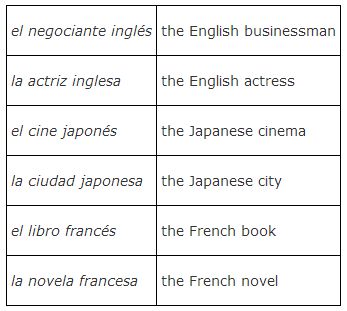
Adjectives in Spanish typically come after the noun it is describing. Los adjetivos en español suelen venir después del sustantivo que está describiendo.
Examples/Ejemplos:
El chico alto. -masculine singular
La chica alta.– feminine singular
Los chicos altos. -masculine plural
Las chicas altas. -feminine plural
History
Latin had two major classes of adjectives (altus and fortis). Neuter endings fell out of use when neuter nouns became reclassified between the other two genders. Atus has four endings (o,a,os,as). Fortis has two endings (e,es). In the late fourteenth century adjectives began to change depending on gender because of the form of -ora (feminine). Adverbs descended from neutered adjectives. Adjectives functioned as nouns in the early fourteenth century
| Plural | |||
| Nominative | terrae | lupī | patrēs |
| Accusative | terrās | lupōs | patrēs |
| Genitive | terrarum | lupōrum | patrum |
| Dative | terrīs | lupīs | patribus |
| Singular | |||
| Nominative | terra ‘land’ | lupus ‘wolf’ | pater ‘father’ |
| Accusative | terram | lupum | patrem |
| Genitive | terrae | lupī | patris |
| Dative | terrae | lupō | patrī |
| Ablative | terrā | lupō | patrē |
Here is a video on adjectives/Aquí hay un video sobre adjetivos:

 Gard Spanish 2
I didn’t know Latin had two major classes of adjectives, anyway I think you did a great job of organization.
LikeLike
I like your front picture and that you put in many examples so it would be easier to learn.
LikeLike
I really like that you translated some of the parts in Spanish for people who speak Spanish and want to know more about the grammar of their language.
LikeLike
It is short and to the point i like it
LikeLike
Short but sweet, great job!
LikeLike
Something that I would have added to your page is that i would have added a diagram of how to form the sentence using adjectives in a sentence.
LikeLike
it gave a lot of really good examples and videos.
LikeLike
Ummmmm, short and sweet good job!
LikeLike
I liked how you guys put lots of examples and a video
LikeLike
The content of the blog is very unique and creative.The video explains a lot of details about Spanish adjectives.The blogspot is very organized and easy to comprehend.Great Job!
LikeLike
Good job with examples and good job with the video, it furthered my understanding with adjectives.
LikeLike
I really liked the picture at the very beginning of this post and also the example format because it made everything really easy to read.
LikeLike